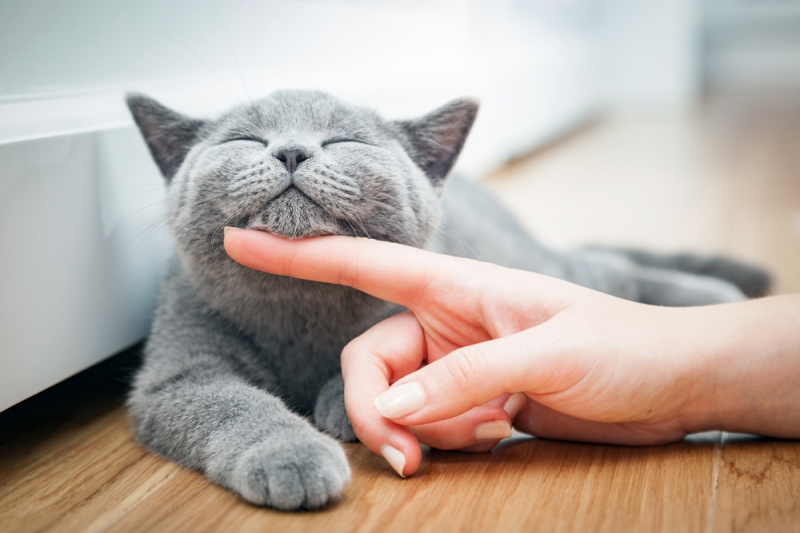
Cats express their love and affection to their owners and other cats in many ways. Here are some common signs of how cats may show their affection:
1.Purring: When a cat purrs, it can be a sign of pleasure, comfort and love. Cats may purr when they are lying next to you, when being petted, or when they are happy.
2.Licking: Cats can express their love by licking you. This is a rather intimate gesture, which is also associated with licking, accepted in the cat world as a sign of care.
3.Head-body rubbing: When a cat rubs its head against you or other objects, it can be a sign of affection and territoriality. This gesture may also be accompanied by purring.
4.Slow Tail Swings: If your cat swings her tail slowly and in a relaxed manner, it can be a sign of comfort and pleasure in your presence.
5.Gifts: Cats sometimes bring you "prey" in the form of toys or even killed insects. This is perceived as a manifestation of care and love.
6.Communication Method: Cats may make soft noises, purr, meow, or even imitate a "catchy" meow to get your attention.
7.Sleeping Close: If your cat prefers to sleep next to you, this may be a sign that she feels safe and comfortable in your presence.
8.Butt Lift: When your cat greets you with her butt raised, it can be a sign of trust and comfort.
It is important to note that every cat is unique and the ways in which they express love may vary. Observe your cat's behavior to better understand her individual expressions of love and affection.
This comprehensive exploration delves into the intricate and subtle ways that cats express love and affection towards their human companions. Drawing on scientific research, feline behavior studies, and the observations of experienced cat owners, this guide aims to unravel the unique feline language of love. Understanding the nuances of cat affection not only deepens the human-feline bond but also fosters a harmonious and enriched coexistence.
1. Introduction: Decoding the Feline Language of Affection
1.1 The Mysterious Nature of Cat Affection:
Cats, renowned for their enigmatic and independent nature, possess a unique language of affection that may be misunderstood or overlooked by some. This guide seeks to decode the subtle cues and behaviors through which cats communicate their love, emphasizing the importance of recognizing and reciprocating these expressions.
1.2 The Significance of Understanding Cat Affection:
For cat owners and enthusiasts, deciphering the language of cat affection is not only rewarding but also essential for building strong, trusting relationships with these mysterious yet beloved companions. This exploration delves into both scientific insights and anecdotal evidence to provide a comprehensive understanding of feline love expressions.
2. Cat Body Language: Visual Signals of Love
2.1 Slow Blinking as a Sign of Trust:
The slow blink is a widely recognized feline gesture indicating trust and affection. Research, such as that conducted by Bradshaw and Cameron-Beaumont (2000), delves into the significance of slow blinking as a positive communication tool in the feline-human relationship.
2.2 Head Butting and Cheek Rubbing:
Head butting and cheek rubbing are common feline behaviors associated with bonding and affection. Scientific studies, including those by Turner and Bateson (2000), explore the role of scent communication and tactile interactions in reinforcing social bonds among cats and their human companions.
2.3 Kneading as a Comforting Gesture:
Kneading, the rhythmic motion of a cat's paws against a soft surface, is often linked to feelings of comfort and security. Behavioral studies, such as those by Buffington et al. (1998), investigate the origins and meanings behind this charming feline behavior.
2.4 Tail Language: Expressing Emotions Through the Tail:
A cat's tail is a dynamic communication tool, and its position and movements convey various emotions, including love. Research on feline tail language, including studies by Curtis (2008), helps unravel the nuanced messages cats convey through their tail positions.
3. Vocalizations: Auditory Expressions of Feline Affection
3.1 Purring as a Multifaceted Expression:
Purring is a well-known feline behavior associated with contentment, but its meaning extends beyond simple happiness. Scientific investigations, such as studies by McComb et al. (2009), explore the multifaceted nature of purring, including its role in communication and healing.
3.2 Chirping and Trilling:
Chirping and trilling are unique vocalizations that cats use to express excitement, affection, and a desire for interaction. Observational studies, including those by Crowell-Davis et al. (2004), shed light on the contexts in which cats employ these endearing vocalizations.
3.3 Meowing for Attention and Connection:
While meowing is a common feline vocalization, its meaning can vary based on context and individual cat personalities. Research on feline vocal communication, such as studies by Feuerstein (2018), provides insights into the different types of meows and their potential meanings.
3.4 Soft Chirps and Blinking During Play:
During play, cats often emit soft chirps and engage in blinking behaviors, which serve as expressions of enjoyment and affection. Behavioral studies, including those by Bradshaw et al. (2016), explore the role of vocalizations and visual cues in feline play interactions.
4. Affectionate Behaviors: Physical Demonstrations of Love
4.1 Cuddling and Nestling:
Cats that seek close physical contact, such as cuddling and nestling against their owners, are exhibiting clear signs of affection. Scientific research, including studies on feline social behaviors by Casey et al. (2009), explores the significance of physical closeness in the feline-human bond.
4.2 Grooming as Social Bonding:
Mutual grooming, or allogrooming, is a behavior commonly seen in bonded cats and their human companions. Research on feline grooming behaviors, such as studies by Leyhausen (1979), examines the social and bonding aspects of this intimate feline activity.
4.3 Sharing Sleeping Spaces:Cats that choose to share sleeping spaces with their owners demonstrate a high level of trust and comfort. Observational studies, including those by Turner et al. (2003), explore the significance of shared sleeping arrangements in the feline-human relationship.
4.4 Bringing "Gifts" as Tokens of Affection:
Cats may present their owners with "gifts," often in the form of prey items, as a demonstration of affection. Scientific investigations, including studies on feline hunting behaviors by Bradshaw (1992), delve into the motivations behind this behavior and its connection to social bonds.
5. Tailored Affection: Recognizing Individual Preferences
5.1 Understanding Individual Differences:
Each cat is unique, with individual preferences and comfort levels regarding affection. Research on feline personalities, including studies by Karsh and Turner (1988), highlights the importance of recognizing and respecting the individual differences in how cats express and receive affection.
5.2 Respecting Boundaries:
While understanding feline affection is crucial, respecting a cat's boundaries is equally important. Scientific insights into feline stress and fear, such as studies by Kessler and Turner (1997), provide guidelines for recognizing signs of discomfort and ensuring positive interactions.
5.3 Building Trust Over Time:
Building trust is a gradual process, and understanding a cat's history and experiences contributes to a more meaningful connection. Behavioral studies, including those on feline socialization by Casey et al. (2002), emphasize the role of positive experiences in fostering trust and affection.
6. The Impact of Environment and Routine on Feline Affection
6.1 Creating Enriching Environments:
The physical environment plays a significant role in shaping a cat's behavior and ability to express affection. Scientific studies on feline environmental enrichment, including research by Stella et al. (2019), offer insights into creating stimulating and enriching spaces that foster positive feline behaviors.
6.2 Routine and Predictability:
Cats thrive on routine and predictability, and disruptions can affect their ability to express and receive affection. Observational studies, including those on feline stress by Heath et al. (2014), explore the impact of routine on a cat's well-being and comfort.
6.3 Positive Reinforcement and Affection:
Positive reinforcement techniques, backed by studies on feline learning and behavior by Yin (2009), play a crucial role in strengthening the feline-human bond. Understanding the principles of positive reinforcement contributes to creating an environment where affectionate behaviors are encouraged.
7. Challenges in Interpreting Feline Affection:
7.1 Cultural Variances in Understanding Feline Behavior:
Cultural perspectives can influence how individuals interpret and respond to feline affection. Comparative studies on feline behavior across cultures, including research by Bradshaw et al. (2009), highlight the need for cultural sensitivity when evaluating feline expressions of love.
7.2 Medical Considerations:
Changes in a cat's behavior, including affectionate behaviors, can sometimes be indicative of underlying medical issues. Research on feline health and behavioral changes, such as studies by Dodman et al. (2018), underscores the importance of considering medical factors in understanding feline affection.
8.Conclusion: Nurturing a Deeper Connection with Feline Companions
8.1 Celebrating the Complexity of Cat Affection:
Feline affection is a complex and multi-faceted language that unfolds through a myriad of behaviors and expressions. This exploration celebrates the richness of this language, acknowledging the depth and uniqueness of the bonds forged between cats and their human companions.
8.2 Ongoing Learning and Adaptation:
Understanding feline affection is an ongoing process that requires continuous learning and adaptation. Staying informed about the latest research in feline behavior and communication, as well as remaining attuned to individual cat preferences, contributes to nurturing a dynamic and evolving connection.
8.3 Mutual Understanding and Respect:
The foundation of a strong feline-human bond lies in mutual understanding and respect. By recognizing the individuality of each cat, respecting their boundaries, and reciprocating affection in the ways they appreciate, cat owners can build relationships based on trust, love, and harmony.
8.4 Fostering Positive Experiences:
Creating positive and enriching experiences for cats is integral to fostering affectionate behaviors. Whether through play, shared activities, or simply spending quality time together, providing opportunities for positive interactions contributes to a fulfilling and loving relationship.
8.5 The Enduring Joy of Feline Companionship:
The enduring joy of living with cats lies in the depth of connection and the subtle yet profound expressions of feline affection. This guide concludes by celebrating the enduring bond between cats and their human companions, a bond that transcends words and is woven into the fabric of shared experiences, mutual trust, and boundless love.
In conclusion, this in-depth exploration aims to provide a comprehensive understanding of how cats express love and affection. By decoding the feline language of affection through visual signals, vocalizations, physical behaviors, and tailored approaches, cat owners can deepen their bonds with their feline companions. Celebrating the complexity of feline affection and embracing the ongoing journey of understanding, this guide contributes to a richer and more fulfilling relationship between cats and their human counterparts.
Comments
Post a Comment